





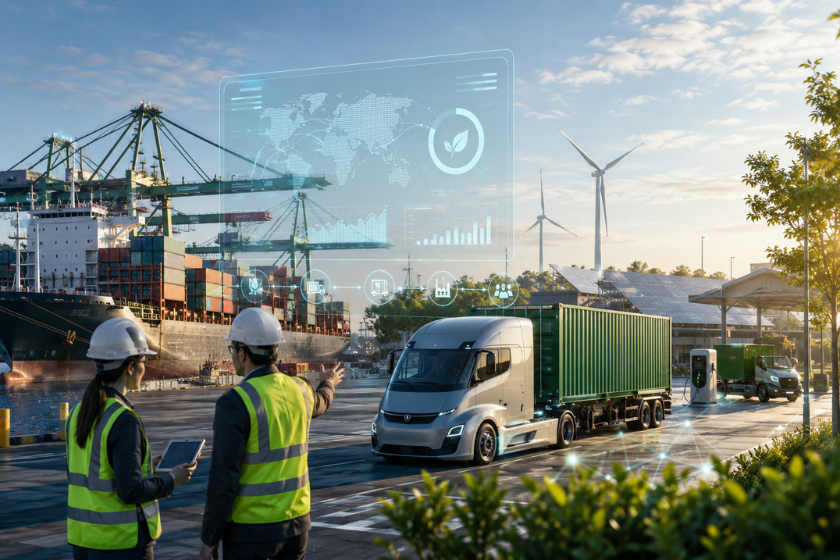
Supply chain decarbonization can become a competitive advantage, not only a compliance task. As companies face stricter reporting rules, rising carbon costs, and growing customer expectations, the supply chain has become one of the most important places to reduce emissions and protect business value.
For many companies, the biggest emissions challenge does not come from offices, factories, or purchased electricity. It comes from suppliers, logistics, materials, packaging, product use, and distribution. In other words, the biggest opportunity often sits outside the company’s direct control.
Why Supply Chain Decarbonization Matters
Scope 3 emissions can represent a very large share of a company’s total carbon footprint. According to the GHG Protocol Scope 3 FAQ, Scope 3 can represent over 90% of a company’s Scope 1, 2, and 3 emissions. These emissions include purchased goods, outsourced manufacturing, transport, product use, and end-of-life impacts.
Yet many companies still lack strong supplier targets. A CDP and BCG analysis found that companies were 2.4 times more likely to set targets for operational emissions than supply chain emissions. The same analysis found that only 15% of companies disclosing to CDP had set a Scope 3 target.
This gap creates risk. Companies may report progress on direct emissions while most of their footprint remains unmanaged. As a result, they may face weaker climate strategies, higher compliance pressure, and less control over future supply chain disruption.
The Main Challenges Companies Face
Supply chain emissions are hard to manage because supply chains are complex. A company may work with hundreds or thousands of suppliers across many countries. Each supplier may use different data systems, energy sources, and measurement methods.
The Trellis Supply Chain Advantage report highlights several barriers, including fragmented data, inconsistent measurement, supplier engagement, and logistics emissions. These challenges often slow progress, even when companies want to act.
Data creates the first barrier. Many suppliers cannot yet provide reliable emissions data. Some use estimates, while others provide no data at all. Therefore, companies need better tools and a clear method for collecting supplier information.
Measurement creates the second barrier. Different suppliers may calculate emissions in different ways. This makes comparison difficult. It also makes Scope 3 reporting less reliable.
Supplier engagement creates another barrier. Companies cannot decarbonize their supply chains through pressure alone. They need collaboration, training, incentives, and shared targets.
Finally, logistics emissions matter. Transport, warehousing, packaging, and route planning all influence carbon performance. Better logistics can reduce emissions and improve efficiency at the same time.
Common Mistakes to Avoid
Companies should not treat Scope 3 as a reporting exercise only. Reporting helps, but it does not reduce emissions by itself.
They should also avoid asking suppliers for data without offering guidance. Many suppliers need support to improve measurement and action. In addition, companies should not wait for perfect data. They can start with estimates, improve data quality over time, and focus first on the highest-impact categories.
Regulation Is Raising the Stakes
Supply chain decarbonization now connects directly with regulation. Under the Corporate Sustainability Reporting Directive, companies subject to the rules must report according to the European Sustainability Reporting Standards. This makes climate, value chain, and emissions data more important for companies operating in or connected to Europe.
The GHG Protocol Corporate Value Chain Standard also gives companies a widely used framework for assessing value chain emissions and identifying where to focus reduction activities. This supports stronger Scope 3 reporting and better decision-making.
At the same time, the EU Emissions Trading System continues to shape carbon costs in covered sectors. Even when a company does not fall directly under the EU ETS, its suppliers, transport partners, energy providers, or materials producers may face carbon-related costs. These costs can move through the value chain.
Therefore, supply chain decarbonization supports both compliance and resilience. It helps companies prepare for reporting expectations, carbon pricing, procurement requirements, and customer demands.
Collaboration Creates Competitive Advantage
Companies that reduce supply chain emissions can gain more than compliance. They can lower risk, improve supplier relationships, reduce waste, and strengthen long-term resilience.
Clear targets help teams move from ambition to action. Better tools help companies collect and compare data. Supplier collaboration helps turn climate goals into practical changes. For example, companies can support suppliers with renewable energy procurement, energy efficiency, materials innovation, packaging redesign, and lower-carbon transport.
This approach also builds trust. Investors, customers, and business partners want evidence. They want to see targets, credible data, progress, and accountability. Companies that can show this evidence may stand out in a crowded market.
FAQs About Supply Chain Decarbonization
- What is supply chain decarbonization?
Supply chain decarbonization means reducing greenhouse gas emissions across suppliers, logistics, materials, packaging, product use, and other value chain activities. It focuses mainly on Scope 3 emissions, which often represent the largest share of a company’s carbon footprint.
- Why is Scope 3 reporting important?
Scope 3 reporting helps companies understand emissions beyond their direct operations. It supports better climate strategy, stronger supplier engagement, and more credible sustainability reporting. It also helps companies prepare for CSRD, ESRS, and investor expectations.
- How can companies start?
Companies can start by identifying high-emission categories, collecting supplier data, setting clear targets, using recognized standards, and engaging priority suppliers. They should focus first on the areas with the greatest impact and business relevance.
Build Stronger Supply Chains Today
Supply chain decarbonization is now a business advantage. It helps companies improve compliance, reduce Scope 3 risk, control costs, and build stronger resilience. It also helps sustainability professionals connect climate action with procurement, logistics, reporting, and business strategy.
Build the skills to lead this shift with Sustainability Academy’s Diploma on Sustainable Supply Chain Management, Online Certificate on Carbon Reduction Strategy, and Online Certificate on Sustainability (ESG) Reporting.
Start learning today and help your organization turn supply chain emissions into a source of resilience, compliance, and competitive advantage.