10 Years. 15,000+ Professionals. 130 Countries. Celebrate with 30% Off

close icon

As companies continue to advance their sustainability strategies and practices, the question of “to what standard” is becoming more urgent. Especially with regard to the procurement policy of a company. Sustainable Procurement means buying products and services from suppliers in a responsible way, in a way that respects economic, ethical and environmental aspects and includes issues such as waste disposal, supply chain and the cost of operation and maintenance over the life of goods or services.

A new standard, ISO 20400, Sustainable Procurement – Guidance is now being drafted, in order to provide organizations with a framework allowing them to integrate and measure sustainable practices into their procurement process.

Why is this important? When suppliers adhere to the organization’s set standards and values, the quality of the relation contributes to the organization’s long-term success and growth. For example, procurement in the public sector alone in OECD countries accounts for 12% of GDP and 29% of government spending. If we can make this amount of money work to an internationally accepted standard, it will be a major contribution toward global sustainability.

Advance your skills in Corporate Sustainability and be up-to-date with all the latest trends, cases and international legislation by joining the top Certified Online Sustainability Courses, offered by the Sustainability Academy.

VIEW ALL COURSES

For more information and special discounts, please contact marketing@cse-net.org

Staying on top of sustainability reporting trends is challenging, since the field is constantly evolving and new standards and expectations are emerging. The focus on reports gradually shifts from mere operations towards a more life-cycle approach. The growing demands for transparency, mandatory disclosure and detailed reporting on CSR initiatives place reporting on top of the agenda for organizations.

According to a Carrots & Sticks survey, regulators urge companies to disclose ESG (environmental, social and governance) information in their annual reports and a trend towards integrated corporate reports was created. That is, investor-relevant sustainability information is concisely reported alongside financial data, while further information may be shared separately. This is also confirmed by Wim Bartels, member of the Financial Stability Board’s Task Force on Climate-related Financial Disclosures and Global Head of Sustainability Reporting & Assurance at KPMG, who expects fewer stand-alone sustainability reports in the future. Even though the tools used to produce sustainability reports (eg. spreadsheets and databases) are basic compared to those used for reporting on financial measures, the findings of an EY survey support that 65 percent of CFOs are now involved in sustainability in terms of cost reduction and risk management, meaning that the status quo may change. There is an increased interest in the representation of companies’ social and environmental impact in financial terms. Such quantification methodologies will facilitate the integration of sustainability issues in the annual reports.

In fact, hard data (numbers) is the norm for reporting leaders. An increase of inquiries is evident from shareholders and investors about sustainability-related issues and, in order to satisfy their stakeholders, companies even compete to offer more quantifiable and, thus, comparable information. The link created between financial and non-financial information through integrated corporate reports is expected to shed light on company risks that were otherwise hard to identify and to provide a clearer view of performance.

One more trend that simplifies comparison of and access to such data is the digitalization and standardization of sustainability reporting and tagging of information. This technological advancement will eventually lead to increased awareness regarding social and environmental impacts of corporations and will allow stakeholders to make choices that reward responsible corporate behaviour. To this end, effective disclosure of more sustainability-related topics can grant businesses higher sustainability ratings or rankings (e.g. Dow Jones Sustainability Index) that can greatly affect their reputation.

Speaking of this digital trend, we have to stress the power of social media where many stakeholders go to validate information. More businesses try to exploit this power and global reach to their benefit and increasingly use social media to communicate their CSR activities. Companies that will manage to capitalize on this direct interaction with stakeholders will be able to develop more effective reporting and even strengthen their overall business strategy.

Moreover, the effectiveness of reports can be reinforced through attentive materiality assessment, which helps identify the most important concerns of stakeholders that simultaneously create opportunities and value for the company. Brian Sansoni, VP of sustainability initiatives of the American Cleaning Institute, foresees an increased use of materiality assessments. The findings of such an assessment are of strategic importance as they are used in reporting to win over key stakeholders and create new growth opportunities. Dr. Nelmara Arbex, GRI’s senior advisor for innovation in reporting, claims that reports in the next decade are expected to demonstrate companies’ strategic commitment to tackle the challenges society will be facing.

Furthermore, aiming to enhance the value of such reporting for shareholders, companies need to seek third-party assurance. External assurance adds credibility to the report, which is crucial in sustainability. Major reporting and disclosure organizations and indices, such as GRI and CDP, encourage assurance of sustainability reports, in order for their content to be verified and validated. It is found that only half of sustainability reports have external assurance. Therefore, it is an essential feature for a company to demonstrate leadership. There are two main reasons that render organizations reluctant to seek external assurance; lack of understanding of the importance and benefits of external assurance and cost.

Also, keep in mind that, since reporting of ESG information has become mandatory in the EU, India and China, it is reccomended to be proactive and comply with the regulations before they are put into effect. SustainAbility’s Global Trends and Opportunities 2016 & beyond report assures that even more companies will be obliged to disclose their major environmental and social impacts as part of their annual reporting cycle due to this directive. These changes are due to begin in 2017 and companies meeting certain criteria will be required to report information on their human rights policies, risks management, due diligence and key performance indicators. Finally, greenhouse gas emissions and water usage reporting is becoming more common through the years.

And if we are talking about Valium, I’m not against chemicals (not sure what synonym would be more appropriate, but it is not 100% accurate), but as a TEMPORARY HELP. The reason why I have made the disclaimer about the chemicals – there are plenty of vegetable chemicals that do NOT (!!!) belong to narcotic drugs. And I am personally for cooperation with specialists.

From a technical aspect, provided that companies mostly follow the GRI framework, we will refer to some changes in the current GRI G4 Guidelines. This October, the GRI G4 Guidelines were transitioned into a set of modular, interrelated GRI Sustainability Reporting Standards, representing global best practice in sustainability reporting and providing the foundation for the future of reporting. Most changes will focus on the structure and format. For organizations already reporting in accordance with G4, impacts on the reporting process should be relatively minor. Improvements aim to increase usability through simplified language and relocation of content. Besides the new modular structure, clarifications on how to use and reference the Standards will be given as well as a clearer distinction between requirements, recommendations and guidance.

As you get more experience in this field, it is important that you keep up with what the leaders do. However, in order to do better than competition, it is critical to be well-informed about issues on the horizon through conversations on blogs and social media. Direct and meaningful insights can also be obtained from experts by attending conferences and webinars.

Much discussion is being made in the last years about Social Return on Investment (SROI) and Impact Assessment. But confusion exists: what is it exactly and what does it serve for?

Social Impact Assessment is a way of accounting for the value created by an organization’s activities. It is an analytic tool for measuring and communicating a much broader concept of value, taking into account social, economic and environmental factors. The SROI methodology, which is one of the leading ones in the area of impact assessment, was standardized by the Social Value UK in 2006 and now includes more than 700 members globally.

But why use it? SROI is a powerful management tool for strategic planning and can raise the organization’s profile or make a stronger case for future funding.

Want to learn about impact assessment and SROI? Join the new Online Course on SROI and learn how to apply impact assessment to your CSR activities. Click here to view all Certified Online Courses of the Sustainability Academy or contact us at marketing@cse-net.org

The Paris climate agreement could be put into action on the condition that at least 55 countries, representing 55 percent of the planet’s emissions in total, have endorsed it. The first ones to support this agreement were the US, followed by China. Later, Brazil and India joined forces, bringing the agreement a step closer to its enforcement.

Now that European countries have expressed their willingness to be part of this agreement, it can be turned into action. As the European Union’s nations account for 12.1 percent of global emissions, this entails that they helped meet the requirements in order for the Paris Agreement to go into effect.

Throughout 2016, world leaders from President Obama to U.N. Secretary-General Ban Ki-moon have pushed to bring the Paris agreement into force as early as possible but few expected that the world would ratify it so rapidly. It’s time for our leaders to stop talking about climate change and start working together to make sure they live up to their commitments and take action. It’s far easier for countries to sign onto an agreement on paper than it is for them to meet their pledges to reduce carbon-dioxide emissions.

The impacts of climate change are already being felt worldwide. Climate change is a global challenge that demands a global response not only from governments but also from the enterprises worldwide .

Where does your organization stand?

Are you and your organization willing to take action?

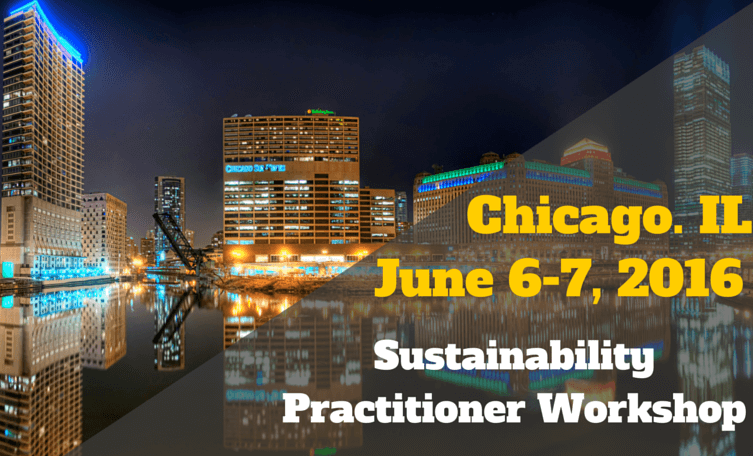
To learn all about successful sustainability strategiesGHG emissionscurrent global and local legislationrecent trends and stakeholders’ engagement, join now the Certified Sustainability Practitioner Program, Advanced Edition 2016 in London, November 24-25.

Learn more and book online here


Given the increased popularity of Corporate Social Responsibility and Sustainability, a rise in demand for well-trained Sustainability Professionals is evident reflected in the fierce competition in the field. As interest in CSR-related jobs is increasing, we find it useful to discuss how you can find a job in the sector.

The first step is to understand the organization you wish to work for and its stakeholders. Evaluate the company’s performance through benchmarking and identify risks and opportunities. You need to be ready to answer the following questions:

How does the business earn profit?

Who is affected by the organization’s operations and how?

What are the characteristics and issues of the environment/society in which it operates?

Remember the “triple bottom line” approach to sustainability: planet, people AND profit. CSR is supposed to benefit the company as well and lead the way to success. So, knowing how the organization operates is crucial in order to combat competition. This is the key to using the organization’s resources wisely and efficiently.

But you may wonder what the required qualifications are…

The CR and Sustainability Salary Survey 2014 conducted by Acre, Flag and Carnstone showed that the majority of professional qualifications are not restricted to CSR-related subjects since the sector is an emerging one. For that reason, such positions are often filled through internal promotions and are appointed to professionals with more than 5 years of experience as subtly stressed by an ECO Canada study. In such situations, on-the-job training is expected.

However, you do not have to be discouraged. Even though entry-level positions are limited, you can still enter the sector. As we said, direct experience is not a prerequisite. Therefore, if you are not currently working for the organization of your preference and looking for a job, you can differentiate through a strong online present. Go beyond demonstrating a good CV. Share your knowledge and thoughts on relative subjects and show you have done your research. Getting involved in CSR communities and staying up to date with CSR and sustainability issues via dedicated websites (CSRwire, Triple Pundit, 3BL) can prove your commitment. Also, participation in online discussions, webinars and conferences will facilitate the networking process with key people, which is of utmost importance for finding a job. On the other hand, if you are already an employee, joining the company’s volunteering or green initiatives is a smart move.

Provided that priority is given to existing personnel, greater emphasis is given to transferable skills and knowledge.

Work on your communications skills. First of all, you will need departments with which you will collaborate to be fully supportive. You want all employees involved to espouse your ideas. Being influential to such an extent implies that you are capable of tailoring your message based on the target audience and effectively communicate your ideas. Use their language in order to change any negative perceptions and associations related to CSR and sustainability. For many employees, these terms are synonymous to rules and conformity.

Undoubtedly, you will need to successfully practice such essential skills when interacting with top management since there may be conflict of interest. Sustainable practice should be aligned with the commercial success of the organization. Communication effectiveness paired with good sales skills is a powerful combination. They may seem irrelevant, but they are the key. You may not have to promote a product or a service, but you still have to sell your idea to top management. You have to act as a salesperson, being ready to predict and handle any objections.

Ambien by https://neurofitnessfoundation.org/ambien-zolpidem/ has a satisfactory tolerability and high safety, including elderly patients. As with the short and long-term use of small doses of the drug, adverse events occur rarely and stop when the drug is canceled. In addition to drowsiness, lethargy and loss of concentration, dizziness, dry mouth, fatigue, nausea, and intestinal dyspepsia may be observed.

Finally, a major test for your skills will be the development of relationships with stakeholders. Trust is the ultimate goal and a great challenge. The secret to building trust is interpersonal skills, such as active listening and empathy, and will hopefully result in stakeholder engagement. To this end, a powerful communication tool, reporting, is used. Knowledge on data analysis and metrics is imperative as well as finding common ground among multiple audiences.

It holds true that CR and Sustainability professionals can provide a competitive advantage for companies and specialized education can make you a more attractive applicant.

The Centre for Sustainability and Excellence (CSE) as a global leader in professional Sustainability training and coaching has already trained more than 5,000 professionals worldwide and over 35% of these stated that after the training were able to find Sustainability related job or been promoted within their company.

“The Olympics will leave a positive legacy, one of possibilities” a local said about the recently concluded 31st Olympiad in Rio de Janeiro. And there is one thing that these Olympic Games will be remembered for.

Despite issues with the city’s security, infrastructure and venues, despite the polluted sea and pools turning green, these Olympic Games succeeded in re-emphasizing the spirit of sport, but will mainly be remembered as an honest attempt to highlight the importance of environmental protection.

In fact, the core theme of the glittering opening ceremony at Maracana Stadium was environmental protection, with performances depicting the birth of life, ending with an impressive green entanglement of leaves sprouting from the stadium floor, depicting the Amazon rainforest. A hopeful message was sent out to global leaders and common people and a commitment was made: Save the planet from environmental destruction. Protect the forests, replant, prevent global warming, heal the planet.

On its part, the Centre for Sustainability and Excellence responsibly strives to plant the seeds for a greener planet and a better future for generations to come.

It does so by empowering Sustainability and Corporate Responsibility professionals through its Advanced Certified Training programs. The programs provide upgraded knowledge and skills on issues such as Carbon Reduction Strategy, ESG Performance, Sustainability Reporting.

For more information and special discounts, please contact communications@cse-net.org

Cause marketing is a cooperative effort between a company and a non-profit organization that benefits both parties. Apart from supporting a good cause, an effective cause marketing strategy can lead to increased sales, enhanced brand image and stronger customer loyalty. That sounds great, right? But let’s not be too hasty.  Below is a list of the most common mistakes to avoid.

  1. Be picky when choosing the non-profit

You do not wish to be run the risk of a wrong choice and build your campaign on a weak foundation. Ethical conduct is important. The guiding principles? Sincerity, authenticity, commitment and transparency.

  1. Beware of the law

One of the main pillars of cause marketing is transparency. So, remember not to be vague but rather specific about your contribution to the cause. You do not want to be suspected of deceptive practices.

  1. Don’t be closed-fisted with your resources

And when we say resources, we do not talk only about money. Of course, you need to control the costs, but time is another key element in the success of cause marketing campaigns. The clock is ticking to your benefit and devoting time is a secret to making an impact.

  1. Avoid confusing cause marketing with philanthropy

This is not a typical charity case. You use your marketing department, so do it wisely instead of missing the true potential!

You should keep in mind that the highlighted mistakes are only a sample of the pitfalls you could come up against and you better proceed with caution at every step of the process. However, these mistakes are the main source of trouble and should be avoided at all costs!

The leading training for Sustainability Professionals offered by CSE, the Certified Sustainability Practitioner Program (Advanced Edition 2016), provides advanced knowledge on responsible communication and cause marketing as well as tips in order to avoid green and blue washing.

Upcoming Trainings

For more information contact: sustainability@cse-net.org

Affordable, online education and coaching to transform society and the environment

Celebrating 1 year of successfully providing Online Certified Courses in Sustainability and Corporate Responsibility, the Sustainability Academy is recognized by top professionals all over the world, with more than 5,000 learners from 30 countries.

The mission of the Sustainability Academy is to offer affordable, accredited online education and coaching in this rapidly rising field and aims to empower professionals, graduates and entrepreneurs so they can meet their stakeholders’ expectations in the best possible way and excel in their profession. Its goal is to train 100,000 professionals by 2020 and make an impact on this planet!

The online courses provide specialized knowledge on how to acquire a Diploma in Corporate Sustainability, make a proper Sustainability Report, improve a corporation’s ESG performance and reduce Corporate Carbon Footprint. There are also special In-house Programs for organizations, who recognize that investing in their human capital through education is the most important determinant for growth and excellence.

The Academy is now hosted in its brand new website which has been especially designed to enhance its speed, responsiveness and user experience, for easy navigation, quick information and registration to the learning management system. Visitors are here encouraged to become Members in order to enjoy special benefits and they can also look for available Sustainability jobs in any city of the world, thanks to the Find a Job feature. The Academy’s Blog offers a variety of related articles and opinions and Members are welcome to write their own stories.

The Sustainability Academy is the initiative of the Centre for Sustainability and Excellence (CSE), who is a recognized global leader in professional Sustainability training and coaching and one of the first to recognize the growing need for advanced certified education in the field.

On its first anniversary, the Academy offers exclusive discounts for all Courses.
Contact us to learn more: communications@cse-net.org

Group registration form


    *Please state the number of licensees you require.


    This will close in 0 seconds